
Website developed on behalf of
the Frans Molenaar Foundation
Texts
Story design & development
All rights reserved.
The Frans Molenaar Foundation has
sought to identify and mention all rights holders.
@ 2025






Website developed on behalf of
the Frans Molenaar Foundation
Texts
Story design & development
All rights reserved.
The Frans Molenaar Foundation has
sought to identify and mention all rights holders.
@ 2025
Composition
in blue and red
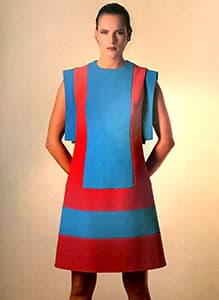
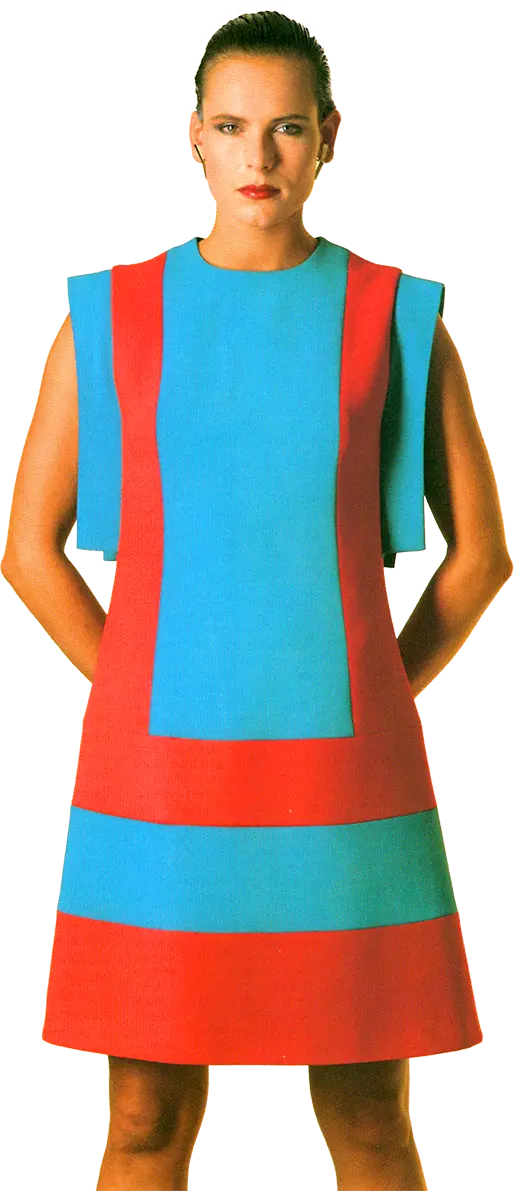
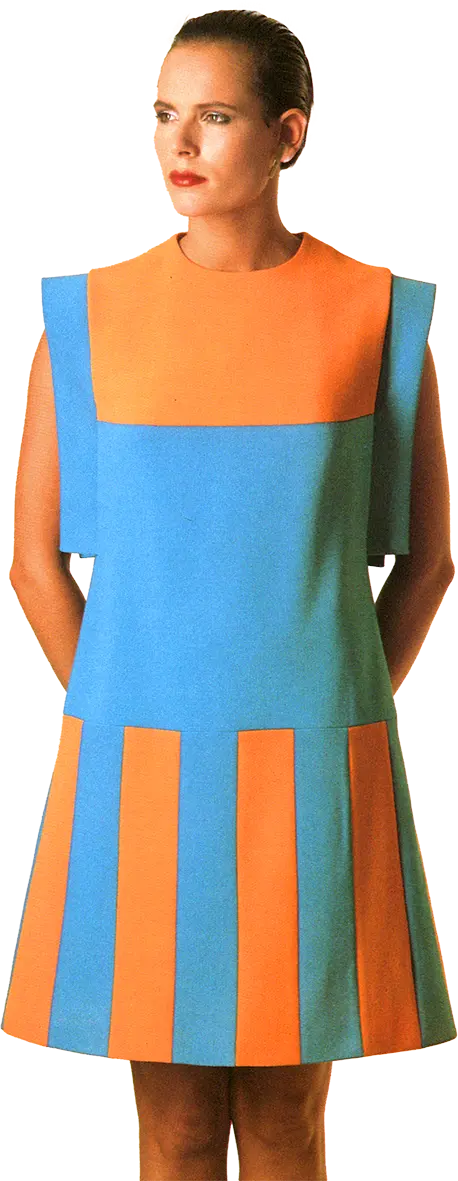
With a nod to the Parisian designer Yves Saint Laurent, who designed a Mondrian dress in 1965, Frans Molenaar is inspired by the colorful abstract-geometric compositions of visual artist Bob Bonies. Molenaar translates Bonies' geometric shapes and bright color contrasts into fabric as precisely as possible. These form experiments, in luxurious, often double-woven couture fabrics from Paris, lead to the so-called 'Bonies dresses' in 1972.
Read more >
Composition
in blue and red
The collaboration with visual artist Bob Bonies also leads to an artistic highlight, not only in Molenaar's oeuvre, but also in the history of post-war Dutch fashion.
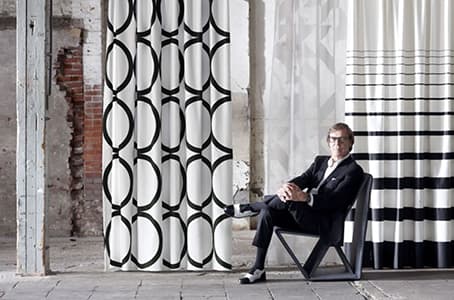
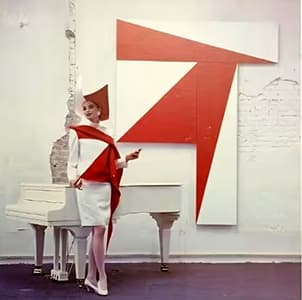
With a nod to the Parisian designer Yves Saint Laurent, who designed a Mondrian dress in 1965, Molenaar is inspired by the colorful abstract-geometric compositions of Bonies, which are in line with the ideas of the De Stijl movement. Bonies exhibits his works in the avant-garde gallery of Riekje Swart on Amsterdam's Van Breestraat, where Molenaar was a regular. In 1970 he was photographed in his own apartment for the weekly magazine Margriet. The couturier poses in front of a work by Bonies with blue and red diagonals that he says he purchased 'instead of an Appel'.
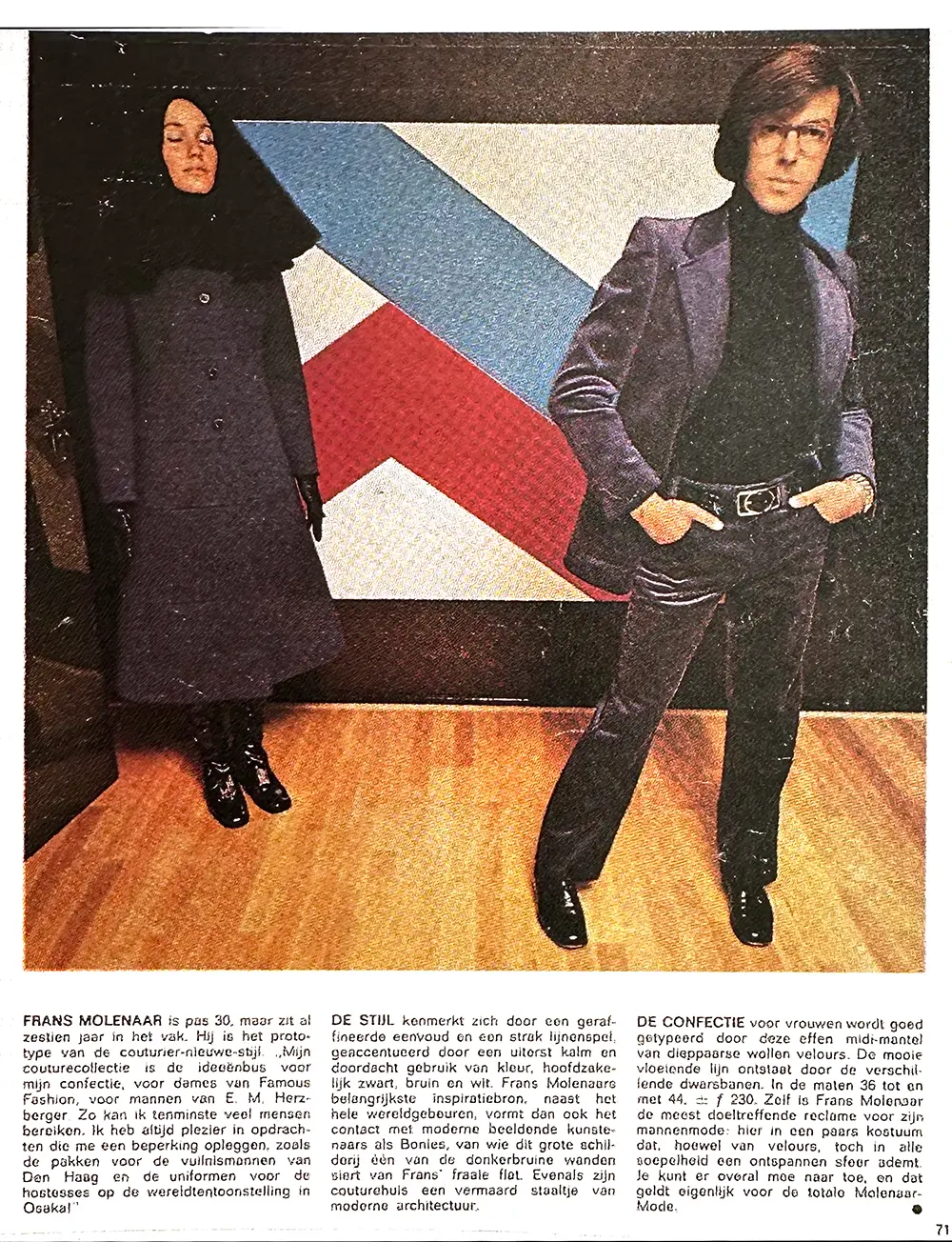
In 1970 he was photographed in his own apartment for the weekly magazine Margriet. The couturier poses in front of a work by Bonies with blue and red diagonals that he says he purchased 'instead of an Appel'.
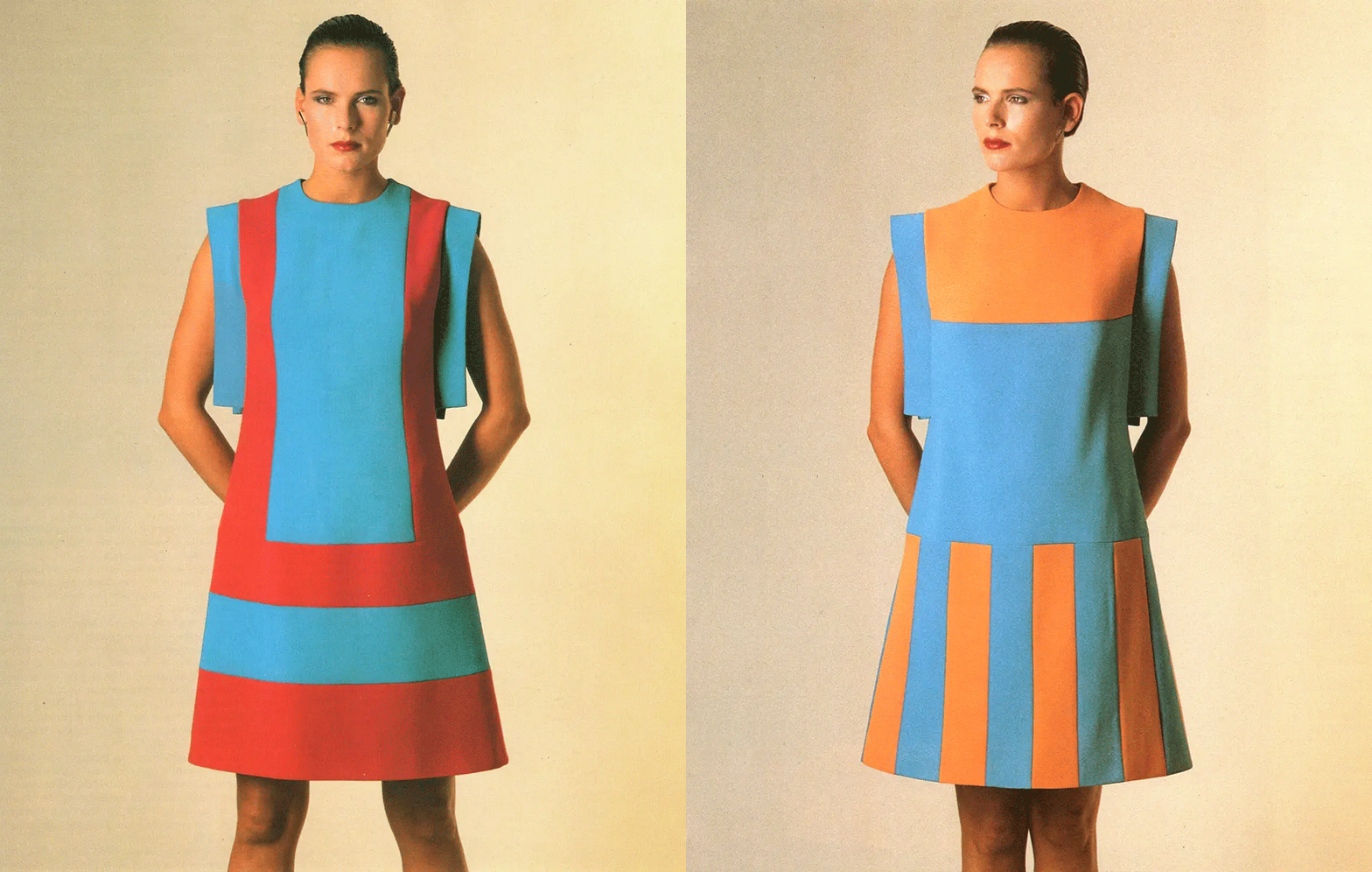
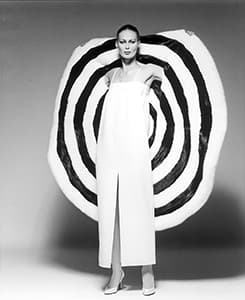
Molenaar translates Bonies' geometric shapes and bright color contrasts into fabric as precisely as possible. These form experiments, in luxurious, often double-woven couture fabrics from Paris, led to these so-called 'Bonies dresses' in 1972. These creations, without too many superfluities such as darts and other details, underline Molenaar's clear, architectural approach to fashion. The flared dresses provide a feminine and refined silhouette.
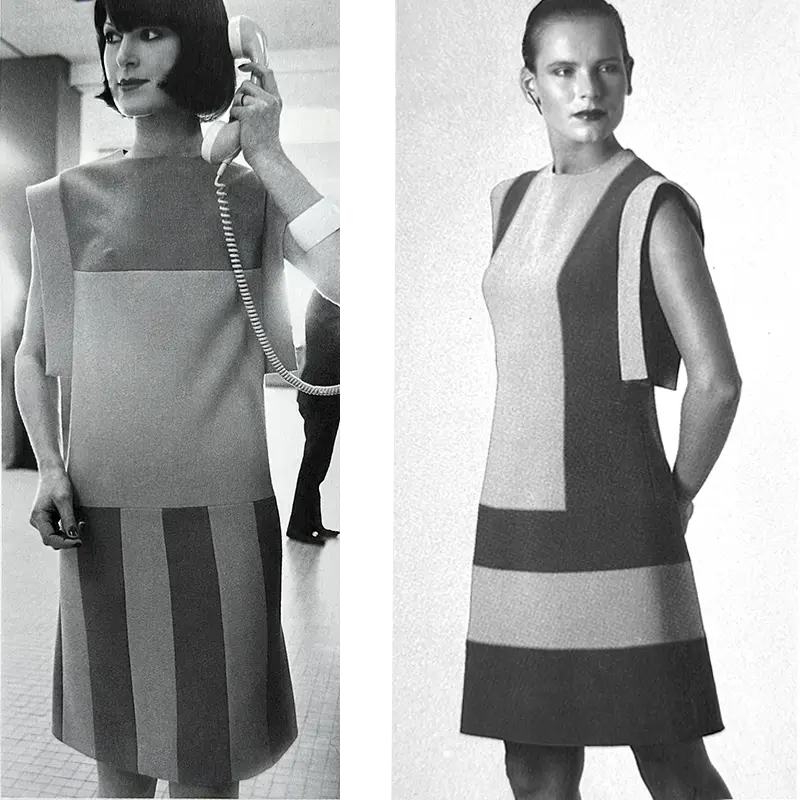
These ingenious, sleek designs consist of balanced areas of color that contrast sharply with each other. The short, minimalist sleeves are reminiscent of Japanese clothing styles, of which the cut fascinated Molenaar enormously. These types of straight 'kimono sleeves' fit naturally within the strict lines of these couture dresses, which were seen on Molenaar's catwalk in 1972 together with other kimono suits. The idiosyncrasy and dimensional stability shown in this collection pleased the national fashion press of the time: 'You cannot deny his clothes a strong character.'
Credits
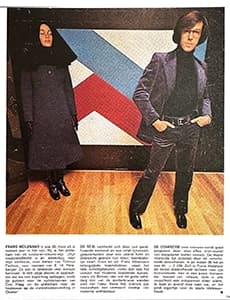

1970 - Magazine Margriet
Frans Molenaar in his home interior
with painting by Bob Bonies
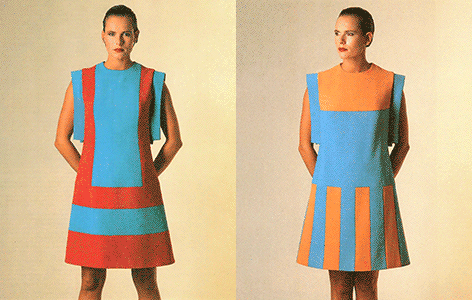
1972 – Couture collection
Spring/Summer 1972
Double woven wool crêpe,
inspired by the art of Bob Bonies
Photos: Peter Dellenbag
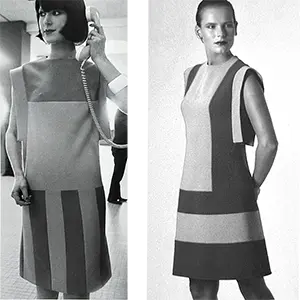
1972 – Couture collection
Double woven wool crêpe,
inspired by the art of Bob Bonies
Photos: Peter Dellenbag
Composition
in blue and red
With a nod to the Parisian designer Yves Saint Laurent, who designed a Mondrian dress in 1965, Frans Molenaar is inspired by the colorful abstract-geometric compositions of visual artist Bob Bonies. Molenaar translates Bonies' geometric shapes and bright color contrasts into fabric as precisely as possible. These form experiments, in luxurious, often double-woven couture fabrics from Paris, lead to the so-called 'Bonies dresses' in 1972.
Read more >
Composition
in blue and red
The collaboration with visual artist Bob Bonies also leads to an artistic highlight, not only in Molenaar's oeuvre, but also in the history of post-war Dutch fashion.
With a nod to the Parisian designer Yves Saint Laurent, who designed a Mondrian dress in 1965, Molenaar is inspired by the colorful abstract-geometric compositions of Bonies, which are in line with the ideas of the De Stijl movement. Bonies exhibits his works in the avant-garde gallery of Riekje Swart on Amsterdam's Van Breestraat, where Molenaar was a regular. In 1970 he was photographed in his own apartment for the weekly magazine Margriet. The couturier poses in front of a work by Bonies with blue and red diagonals that he says he purchased 'instead of an Appel'.
In 1970 he was photographed in his own apartment for the weekly magazine Margriet. The couturier poses in front of a work by Bonies with blue and red diagonals that he says he purchased 'instead of an Appel'.
Molenaar translates Bonies' geometric shapes and bright color contrasts into fabric as precisely as possible. These form experiments, in luxurious, often double-woven couture fabrics from Paris, led to these so-called 'Bonies dresses' in 1972. These creations, without too many superfluities such as darts and other details, underline Molenaar's clear, architectural approach to fashion. The flared dresses provide a feminine and refined silhouette.
These ingenious, sleek designs consist of balanced areas of color that contrast sharply with each other. The short, minimalist sleeves are reminiscent of Japanese clothing styles, of which the cut fascinated Molenaar enormously. These types of straight 'kimono sleeves' fit naturally within the strict lines of these couture dresses, which were seen on Molenaar's catwalk in 1972 together with other kimono suits. The idiosyncrasy and dimensional stability shown in this collection pleased the national fashion press of the time: 'You cannot deny his clothes a strong character.'
Credits
1970 - Magazine Margriet
Frans Molenaar in his home interior
with painting by Bob Bonies
1972 – Couture collection
Spring/Summer 1972
Double woven wool crêpe,
inspired by the art of Bob Bonies
Photos: Peter Dellenbag
1972 – Couture collection
Double woven wool crêpe,
inspired by the art of Bob Bonies
Photos: Peter Dellenbag
Composition
in blue and red
With a nod to the Parisian designer Yves Saint Laurent, who designed a Mondrian dress in 1965, Frans Molenaar is inspired by the colorful abstract-geometric compositions of visual artist Bob Bonies. Molenaar translates Bonies' geometric shapes and bright color contrasts into fabric as precisely as possible. These form experiments, in luxurious, often double-woven couture fabrics from Paris, lead to the so-called 'Bonies dresses' in 1972.
Read more >
Composition
in blue and red
The collaboration with visual artist Bob Bonies also leads to an artistic highlight, not only in Molenaar's oeuvre, but also in the history of post-war Dutch fashion.
With a nod to the Parisian designer Yves Saint Laurent, who designed a Mondrian dress in 1965, Molenaar is inspired by the colorful abstract-geometric compositions of Bonies, which are in line with the ideas of the De Stijl movement. Bonies exhibits his works in the avant-garde gallery of Riekje Swart on Amsterdam's Van Breestraat, where Molenaar was a regular. In 1970 he was photographed in his own apartment for the weekly magazine Margriet. The couturier poses in front of a work by Bonies with blue and red diagonals that he says he purchased 'instead of an Appel'.
In 1970 he was photographed in his own apartment for the weekly magazine Margriet. The couturier poses in front of a work by Bonies with blue and red diagonals that he says he purchased 'instead of an Appel'.
Molenaar translates Bonies' geometric shapes and bright color contrasts into fabric as precisely as possible. These form experiments, in luxurious, often double-woven couture fabrics from Paris, led to these so-called 'Bonies dresses' in 1972. These creations, without too many superfluities such as darts and other details, underline Molenaar's clear, architectural approach to fashion. The flared dresses provide a feminine and refined silhouette.
These ingenious, sleek designs consist of balanced areas of color that contrast sharply with each other. The short, minimalist sleeves are reminiscent of Japanese clothing styles, of which the cut fascinated Molenaar enormously. These types of straight 'kimono sleeves' fit naturally within the strict lines of these couture dresses, which were seen on Molenaar's catwalk in 1972 together with other kimono suits. The idiosyncrasy and dimensional stability shown in this collection pleased the national fashion press of the time: 'You cannot deny his clothes a strong character.'
Credits
1970 - Magazine Margriet
Frans Molenaar in his home interior
with painting by Bob Bonies
1972 – Couture collection
Spring/Summer 1972
Double woven wool crêpe,
inspired by the art of Bob Bonies
Photos: Peter Dellenbag
1972 – Couture collection
Double woven wool crêpe,
inspired by the art of Bob Bonies
Photos: Peter Dellenbag