
Website developed on behalf of
the Frans Molenaar Foundation
Texts
Story design & development
All rights reserved.
The Frans Molenaar Foundation has
sought to identify and mention all rights holders.
@ 2025


Website developed on behalf of
the Frans Molenaar Foundation
Texts
Story design & development
All rights reserved.
The Frans Molenaar Foundation has
sought to identify and mention all rights holders.
@ 2025
Balance
Artists
At the end of the sixties, Frans Molenaar permanently exchanged the fashion city of Paris for Amsterdam. There he seeks the company of the avant-garde in visual arts, design and architecture. For example, he often collaborates with architect Cees Dam and his wife Josephine. His collaboration with sculptor André Volten led to one of the most sensational designs in Molenaar's oeuvre: the famous 'Ball' dress, which Molenaar designed especially for André's wife Sophie in 1970.
< logo designed by Josephine Dam-Holt
Read more >
Balance
artists
At the end of the sixties, Molenaar permanently exchanged the fashion city of Paris for Amsterdam. There he seeks the company of the avant-garde in visual arts, design and architecture.
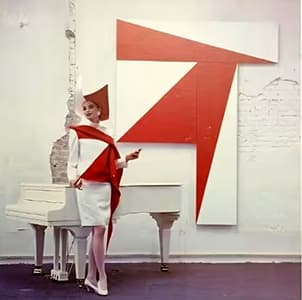
His collection of mainly geometric-abstract works by artists such as Bob Bonies, Ad Dekkers and Jan Schoonhoven is growing steadily. Molenaar's preference for functional design and architecture took shape during that time. This results in a number of artistically very fruitful cross-pollinations.
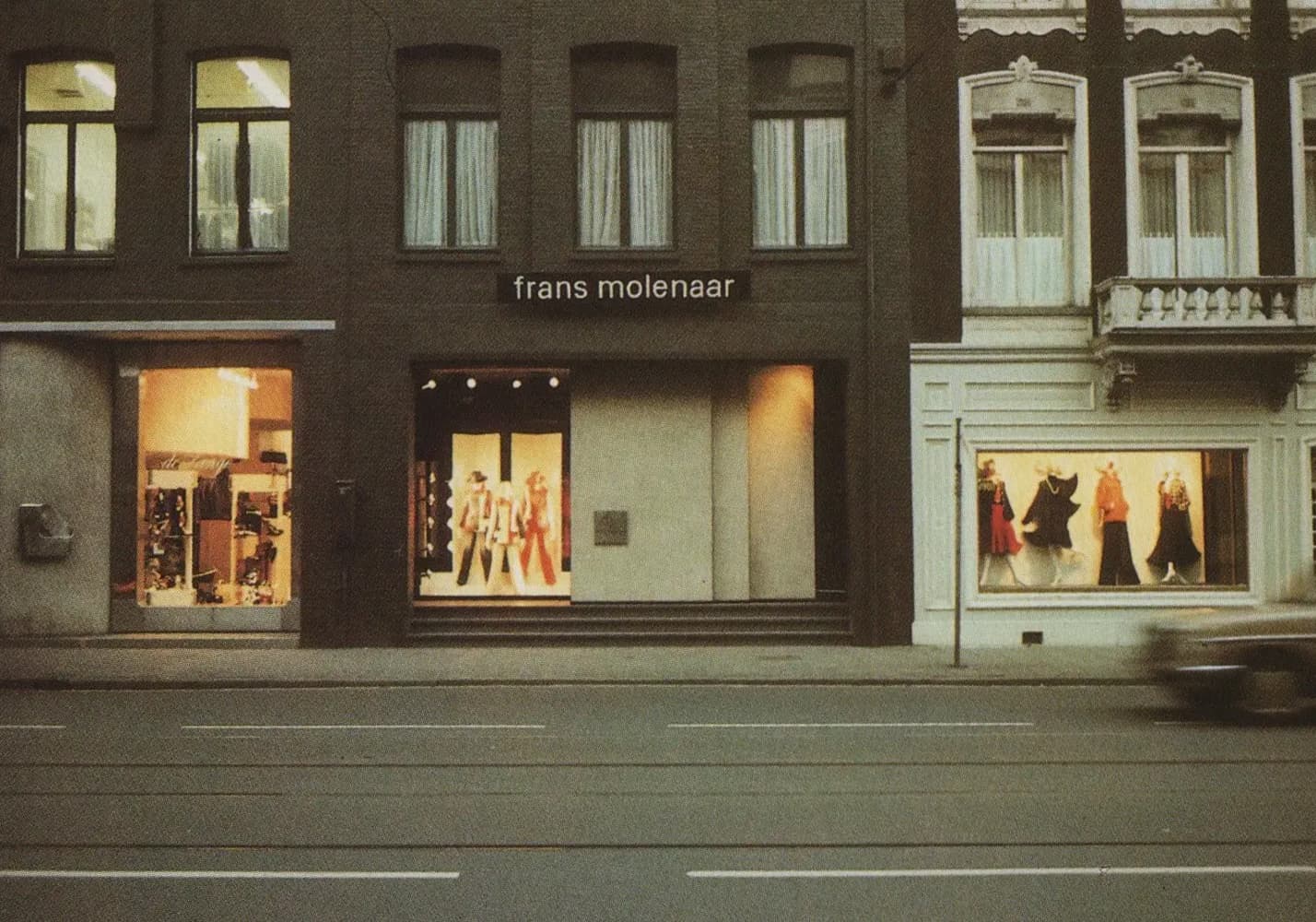
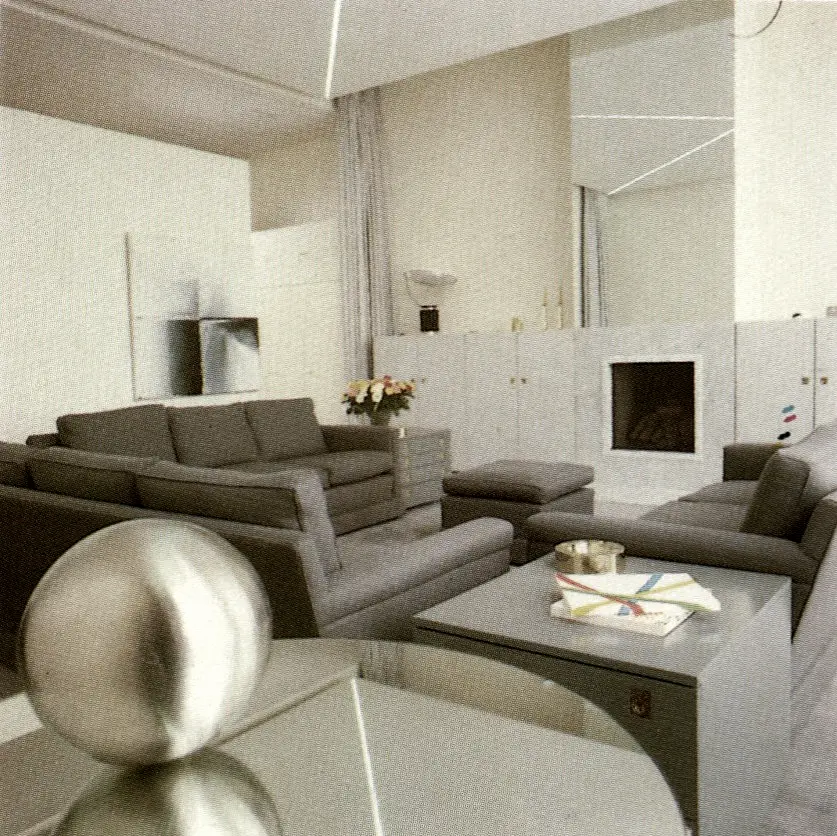
Architect Cees Dam designs the sleek, calm interior of his building on Van Baerlestraat.
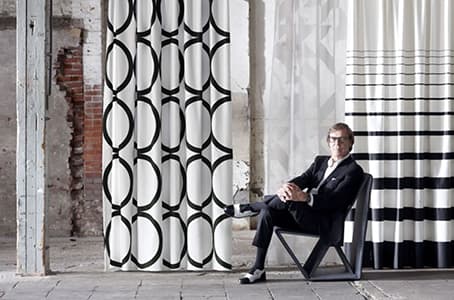
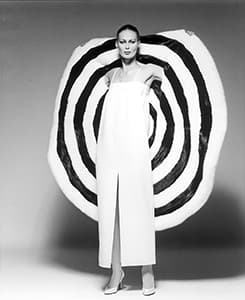
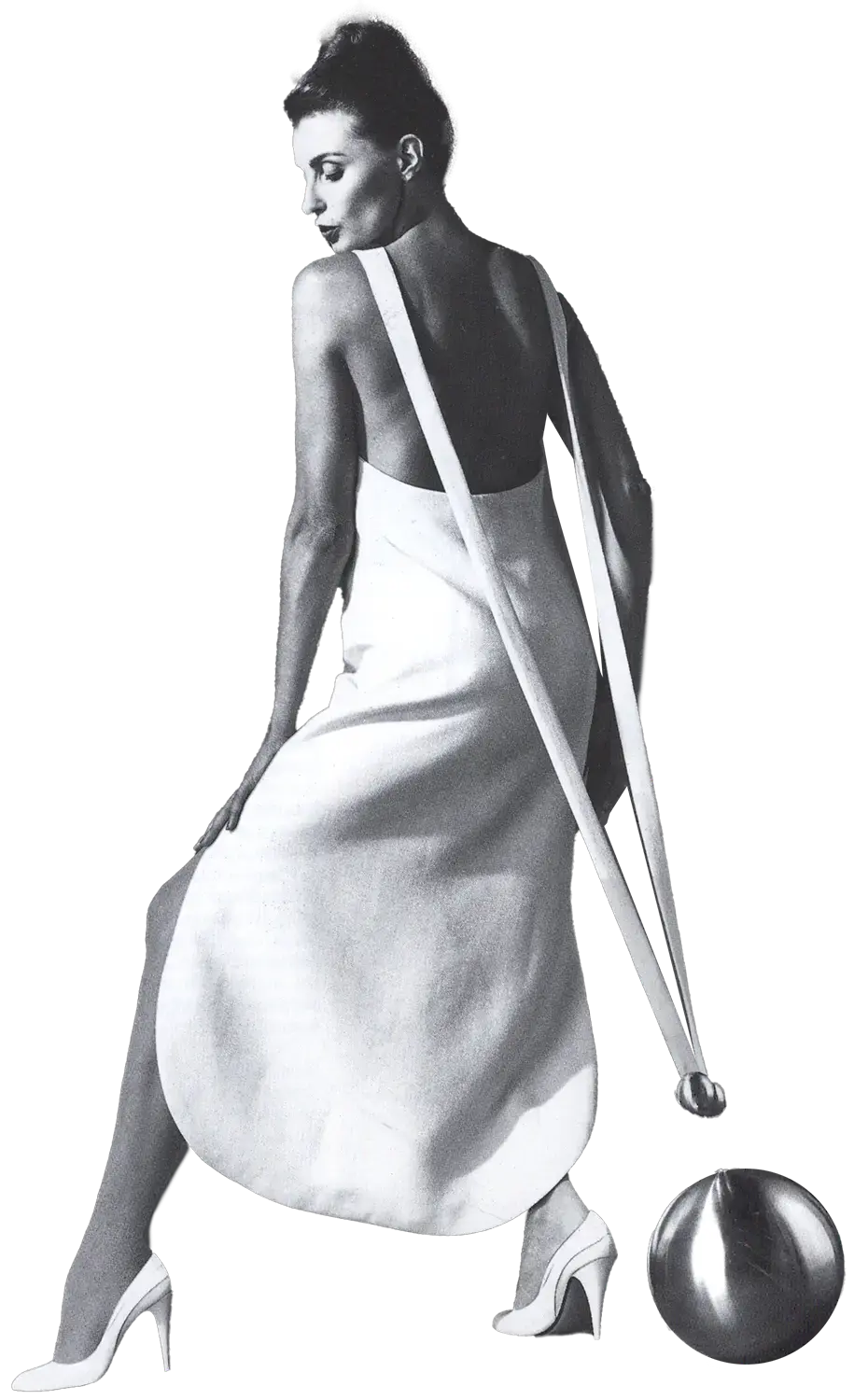
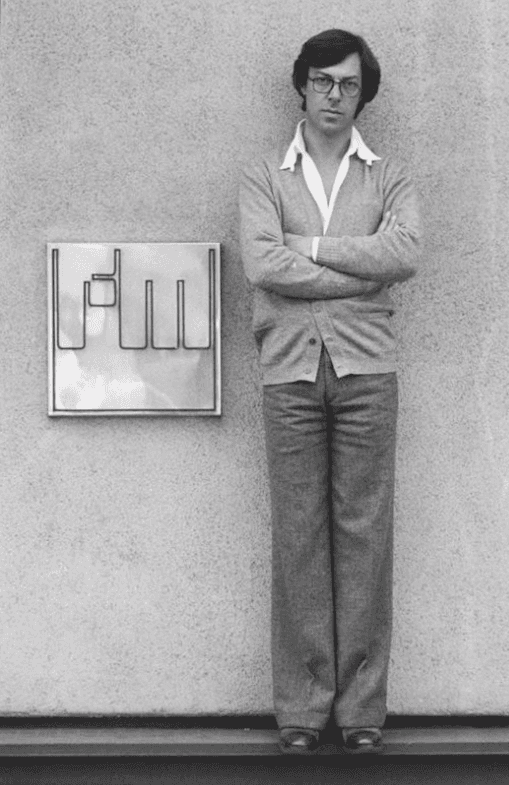
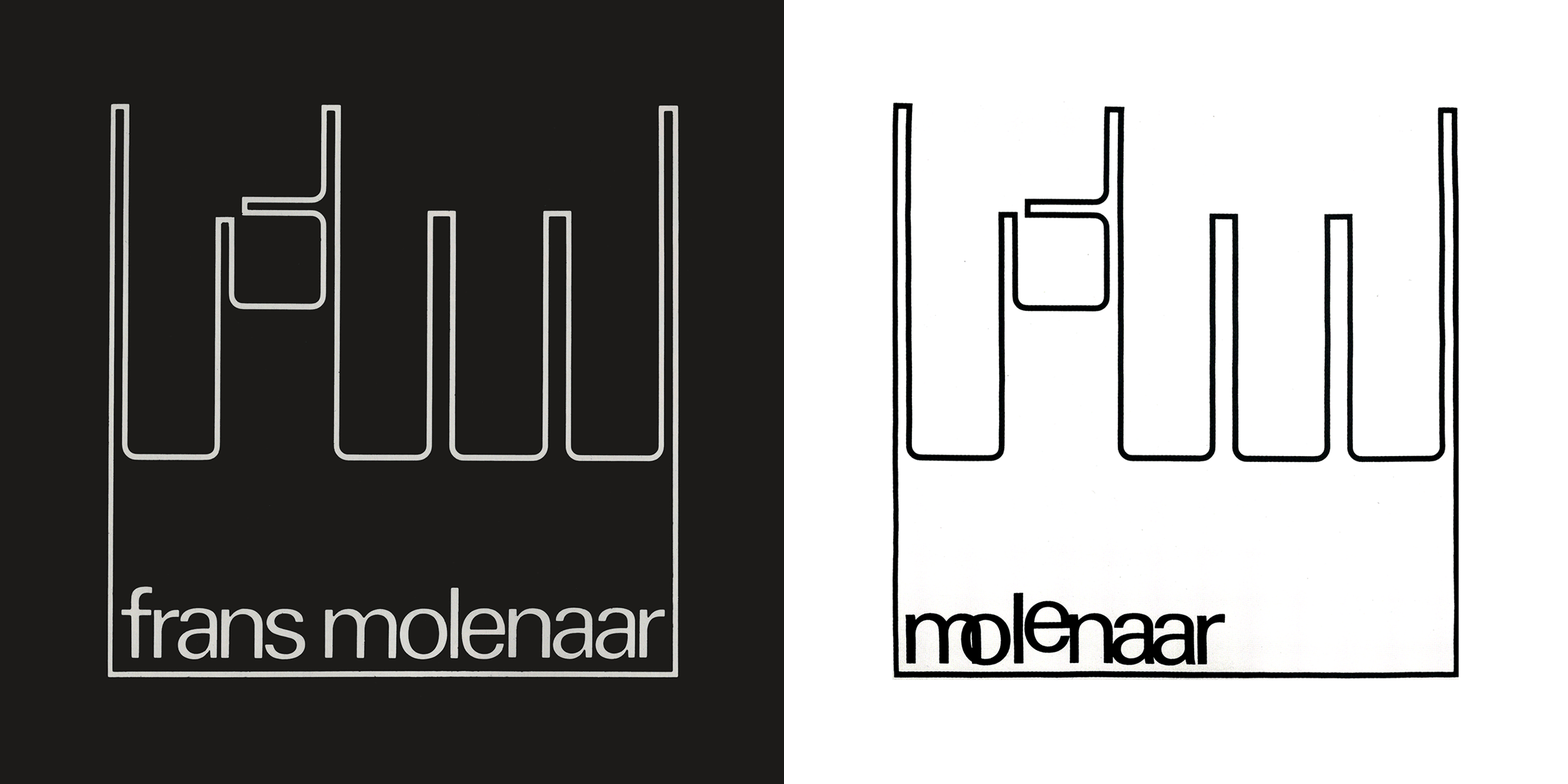
Dam's wife Josephine designs the corporate identity, including the characteristic black-and-white logo that adorns the façade and clothing labels for a long time. With sculptor André Volten, it even leads to a joint design, the famous 'Bal' dress, which Molenaar designs in 1970 specifically for André's wife Sophie.
André Volten distinguishes himself with bold abstract sculptures in public spaces. His enormous formats are often impossible to ignore. The granite 'sitting circle' at the entrance of the Amsterdam Stopera is a characteristic example.
Like Molenaar, Volten is a master of omission and had a sense of scale and proportion. All components and every detail are essential elements of the overall concept. Their collaboration leads to one of the most remarkable designs in Molenaar's oeuvre.
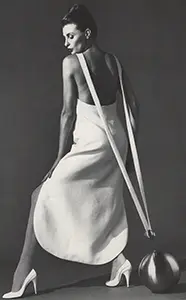
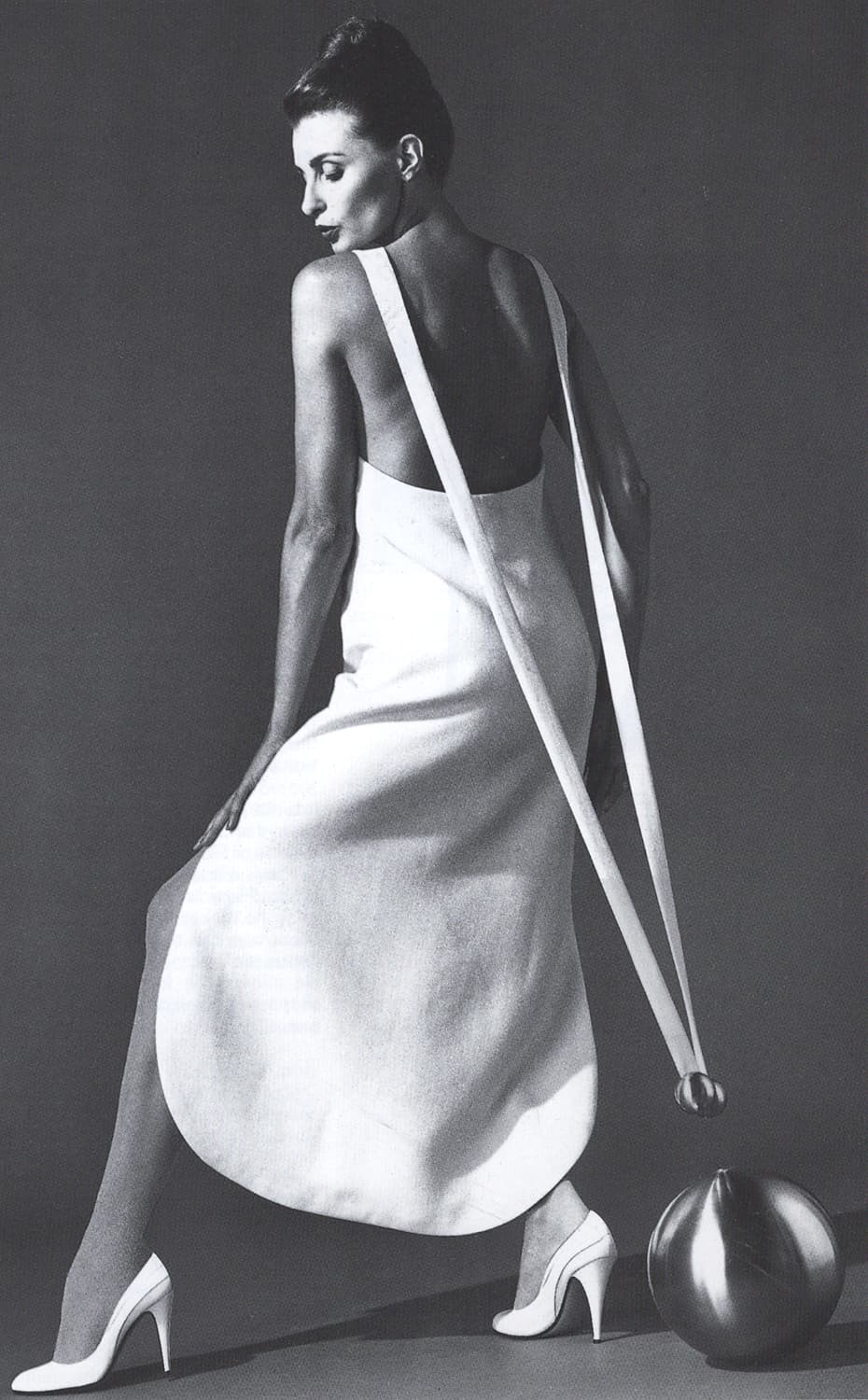
Their joint creation consists of two fabric panels of creamy white woolen crepe with rounded corners, completely in line with Molenaar's other designs at the time. Eye-catching are the two long shoulder straps that hang far over the shoulders, with two small balls of shiny stainless steel attached to them. These counterweights, according to Volten's idea, should keep this evening dress or 'Robe Bascule' in shape. The latter was quite a challenge according to the owner. A major balancing act that is still controversial.
Credits
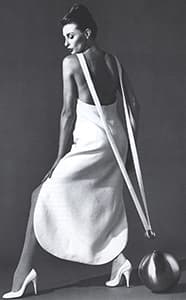

1970 - Ball dress or Bascule dress
Joint design
Frans Molenaar & André Volten
Photo: Bart van Leeuwen
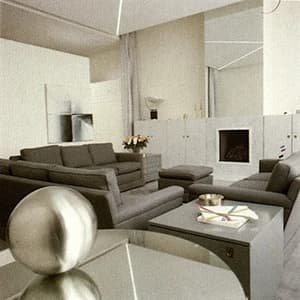
978 – Residential interior Frans Molenaar
Oranje Nassaulaan 13, Amsterdam
Designed by Cees Dam
Photo: John Vaughan
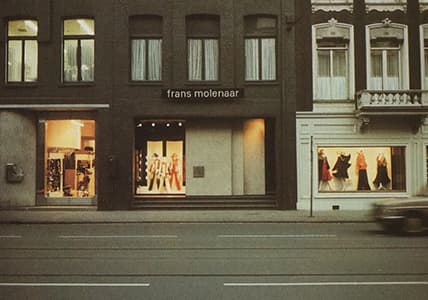
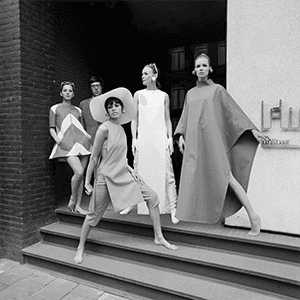
1974 - Front of
Frans Molenaar couture house
Van Baerlestraat 14, Amsterdam
Designed by Cees Dam
Photo: Frits Huyse
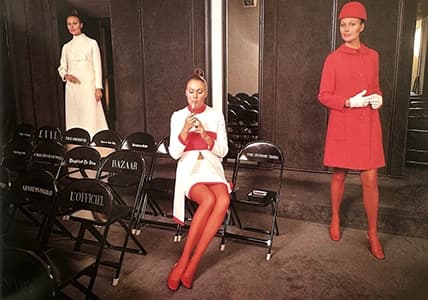
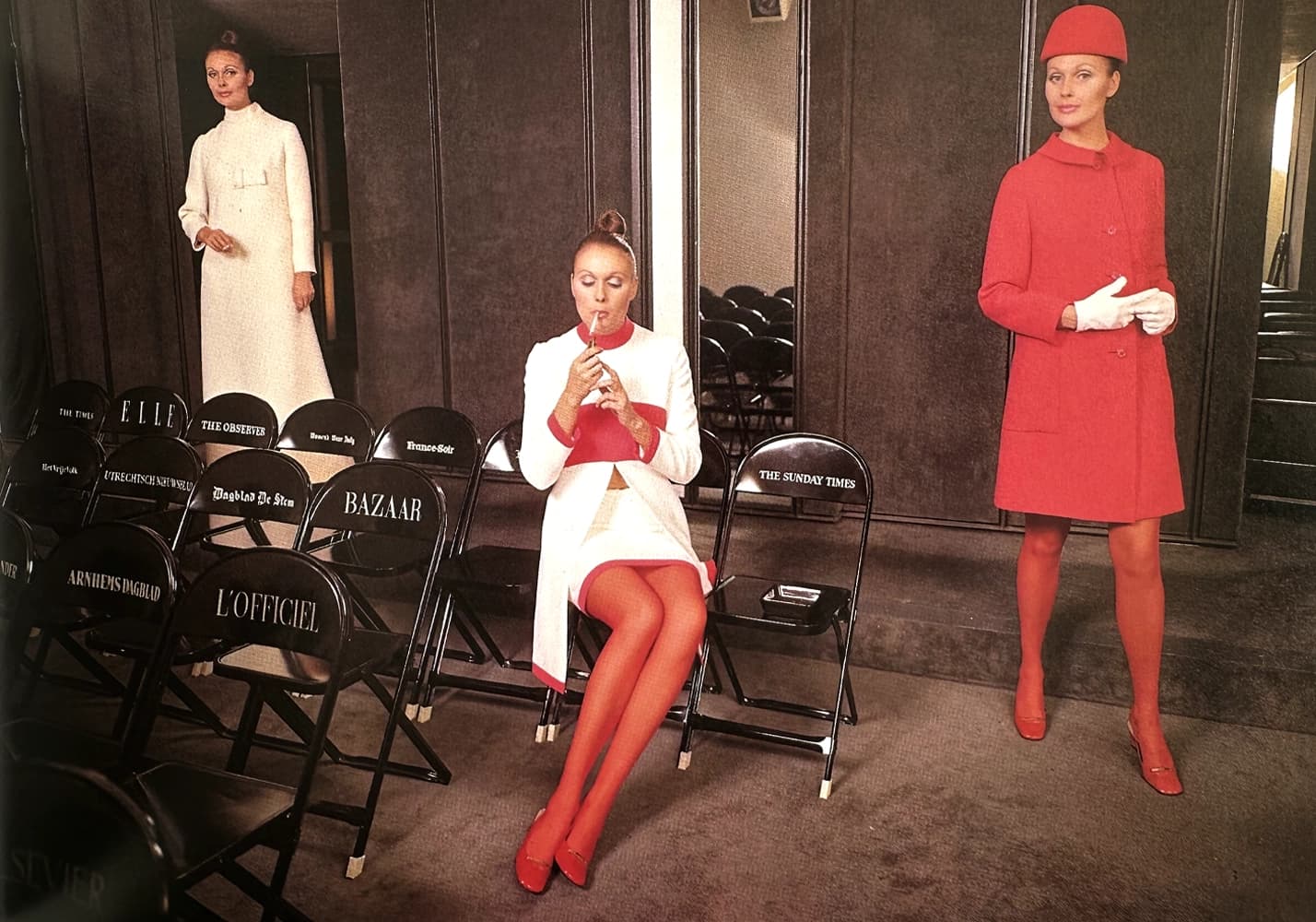
1974 - Salon
Frans Molenaar couture house
Van Baerlestraat 14, Amsterdam
Photo: Anton Veltkamp
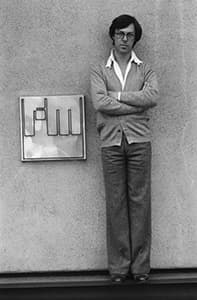
1976 - Frans Molenaar
Frans Molenaar next to the logo
designed by Josephine Dam-Holt
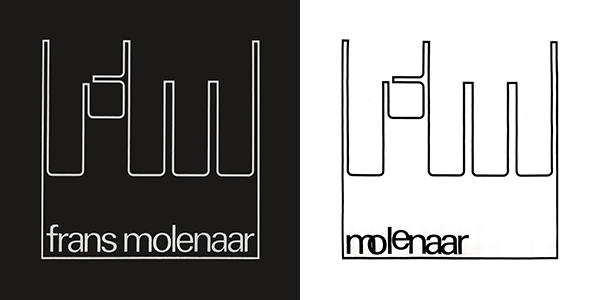
Logo
Designer: Josephine Dam
Balancing
Artists
At the end of the sixties, Frans Molenaar permanently exchanged the fashion city of Paris for Amsterdam. There he seeks the company of the avant-garde in visual arts, design and architecture. For example, he often collaborates with architect Cees Dam and his wife Josephine. His collaboration with sculptor André Volten led to one of the most sensational designs in Molenaar's oeuvre: the famous 'Ball' dress, which Molenaar designed especially for André's wife Sophie in 1970.
< logo designed by Josephine Dam-Holt
Read more >
Balance
artists
At the end of the sixties, Molenaar permanently exchanged the fashion city of Paris for Amsterdam. There he seeks the company of the avant-garde in visual arts, design and architecture.
His collection of mainly geometric-abstract works by artists such as Bob Bonies, Ad Dekkers and Jan Schoonhoven is growing steadily. Molenaar's preference for functional design and architecture took shape during that time. This results in a number of artistically very fruitful cross-pollinations.
Architect Cees Dam designs the sleek, calm interior of his building on Van Baerlestraat.
Dam's wife Josephine designs the corporate identity, including the characteristic black-and-white logo that adorns the façade and clothing labels for a long time. With sculptor André Volten, it even leads to a joint design, the famous 'Bal' dress, which Molenaar designs in 1970 specifically for André's wife Sophie.
André Volten distinguishes himself with bold abstract sculptures in public spaces. His enormous formats are often impossible to ignore. The granite 'sitting circle' at the entrance of the Amsterdam Stopera is a characteristic example.
Like Molenaar, Volten is a master of omission and had a sense of scale and proportion. All components and every detail are essential elements of the overall concept. Their collaboration leads to one of the most remarkable designs in Molenaar's oeuvre.
Their joint creation consists of two fabric panels of creamy white woolen crepe with rounded corners, completely in line with Molenaar's other designs at the time. Eye-catching are the two long shoulder straps that hang far over the shoulders, with two small balls of shiny stainless steel attached to them. These counterweights, according to Volten's idea, should keep this evening dress or 'Robe Bascule' in shape. The latter was quite a challenge according to the owner. A major balancing act that is still controversial.
Credits
1970 - Ball dress or Bascule dress
Joint design
Frans Molenaar & André Volten
Photo: Bart van Leeuwen
978 – Residential interior Frans Molenaar
Oranje Nassaulaan 13, Amsterdam
Designed by Cees Dam
Photo: John Vaughan
1974 - Front of
Frans Molenaar couture house
Van Baerlestraat 14, Amsterdam
Designed by Cees Dam
Photo: Frits Huyse
1974 - Salon
Frans Molenaar couture house
Van Baerlestraat 14, Amsterdam
Photo: Anton Veltkamp
1976 - Frans Molenaar
Frans Molenaar next to the logo
designed by Josephine Dam-Holt
Logo
Designer: Josephine Dam
Balancing
Artists
At the end of the sixties, Frans Molenaar permanently exchanged the fashion city of Paris for Amsterdam. There he seeks the company of the avant-garde in visual arts, design and architecture. For example, he often collaborates with architect Cees Dam and his wife Josephine. His collaboration with sculptor André Volten led to one of the most sensational designs in Molenaar's oeuvre: the famous 'Ball' dress, which Molenaar designed especially for André's wife Sophie in 1970.
< logo designed by Josephine Dam-Holt
Read more >
Balance
artists
At the end of the sixties, Molenaar permanently exchanged the fashion city of Paris for Amsterdam. There he seeks the company of the avant-garde in visual arts, design and architecture.
His collection of mainly geometric-abstract works by artists such as Bob Bonies, Ad Dekkers and Jan Schoonhoven is growing steadily. Molenaar's preference for functional design and architecture took shape during that time. This results in a number of artistically very fruitful cross-pollinations.
Architect Cees Dam designs the sleek, calm interior of his building on Van Baerlestraat.
Dam's wife Josephine designs the corporate identity, including the characteristic black-and-white logo that adorns the façade and clothing labels for a long time. With sculptor André Volten, it even leads to a joint design, the famous 'Bal' dress, which Molenaar designs in 1970 specifically for André's wife Sophie.
André Volten distinguishes himself with bold abstract sculptures in public spaces. His enormous formats are often impossible to ignore. The granite 'sitting circle' at the entrance of the Amsterdam Stopera is a characteristic example.
Like Molenaar, Volten is a master of omission and had a sense of scale and proportion. All components and every detail are essential elements of the overall concept. Their collaboration leads to one of the most remarkable designs in Molenaar's oeuvre.
Their joint creation consists of two fabric panels of creamy white woolen crepe with rounded corners, completely in line with Molenaar's other designs at the time. Eye-catching are the two long shoulder straps that hang far over the shoulders, with two small balls of shiny stainless steel attached to them. These counterweights, according to Volten's idea, should keep this evening dress or 'Robe Bascule' in shape. The latter was quite a challenge according to the owner. A major balancing act that is still controversial.
Credits
1970 - Ball dress or Bascule dress
Joint design
Frans Molenaar & André Volten
Photo: Bart van Leeuwen
978 – Residential interior Frans Molenaar
Oranje Nassaulaan 13, Amsterdam
Designed by Cees Dam
Photo: John Vaughan
1974 - Front of
Frans Molenaar couture house
Van Baerlestraat 14, Amsterdam
Designed by Cees Dam
Photo: Frits Huyse
1974 - Salon
Frans Molenaar couture house
Van Baerlestraat 14, Amsterdam
Photo: Anton Veltkamp
1976 - Frans Molenaar
Frans Molenaar next to the logo
designed by Josephine Dam-Holt
Logo
Designer: Josephine Dam