
Website developed on behalf of
the Frans Molenaar Foundation
Copy
Design & development
All rights reserved.
The Frans Molenaar Foundation has
sought to identify and mention all rights holders.
@ 2025


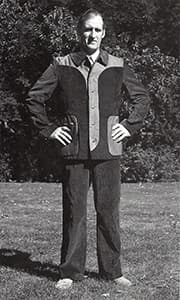
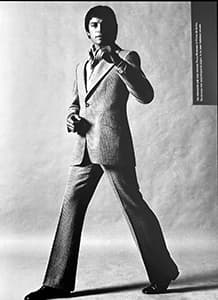
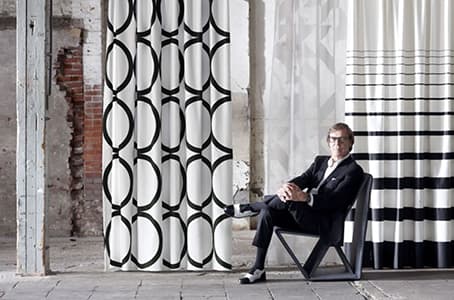
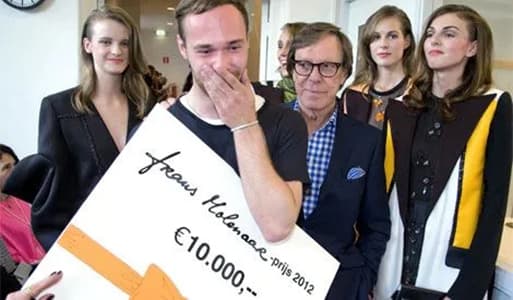
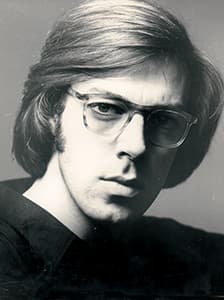
Discover the history
Home intro

Website developed on behalf of
the Frans Molenaar Foundation
Copy
Design & development
All rights reserved.
The Frans Molenaar Foundation has
sought to identify and mention all rights holders.
@ 2025
Discover the history
Home intro
Paris, Paris!
In the 1950s, Dutch couture is still firmly under the influence of the strict fashion house of Paris. Imitating French couture designs under license is very en vogue. Pattern, fabric use, and execution are closely monitored. A Dutch copy of a Dior coat suit is fully accepted and represents superior quality.
More eccentric couturiers, pioneers like Max Heymans and Dick Holthaus, do find their inspiration in Paris, but they chart a more independent course for Dutch fashion. They design under their own name.
Molenaars' earliest creations are not spared from French 'trends'. Although the fabrics used, such as printed cotton, as well as solid wool fabrics, are often quintessentially Dutch, produced in equally quintessential Dutch textile cities like Enschede or Tilburg.
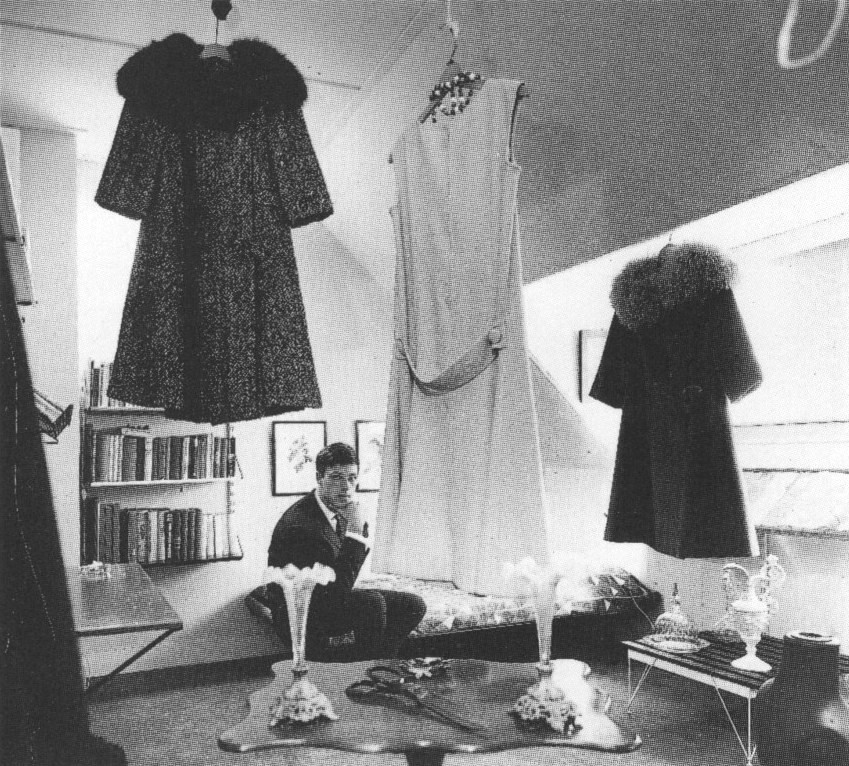
At a young age, in his childhood home in Zandvoort, he began creating ensembles and cocktail dresses with boat necks, shawl collars, and petticoats with considerable flair. He worked under the ominous name "Couture François". This, according to him, "because all the fishmongers in Zandvoort are called Molenaar."
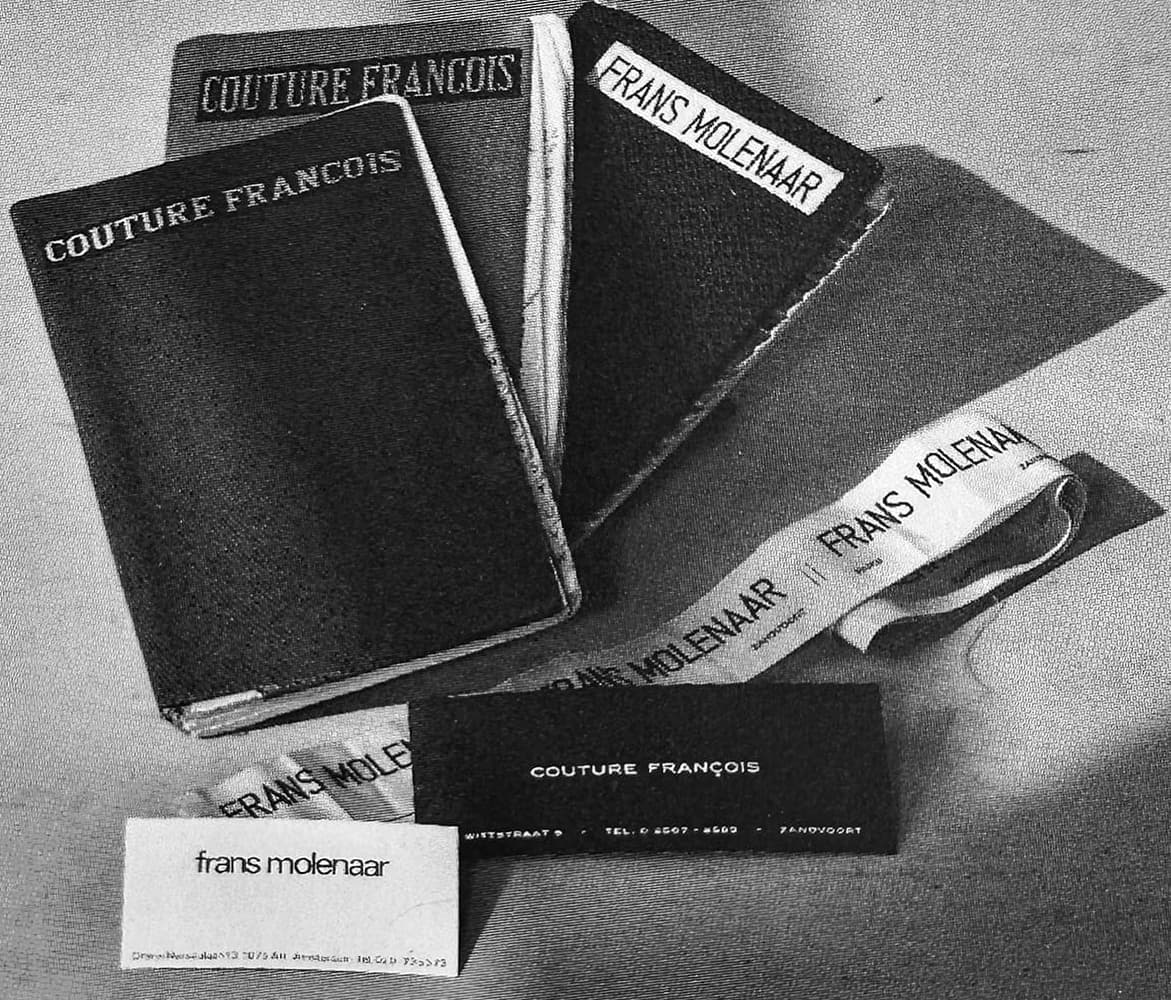
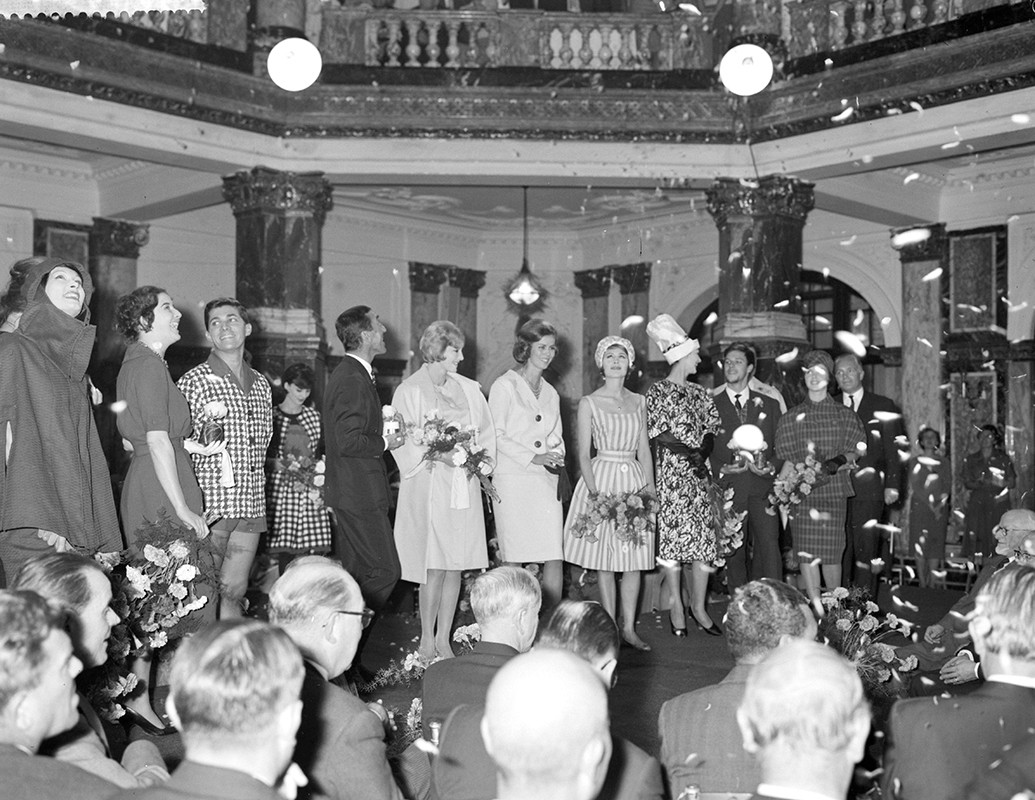
His creations quickly won several professional awards, giving his career a flying start. This not only promoted Dutch fabrics both domestically and internationally, but also generated positive publicity for Molenaar himself. His designs also ended up in Dutch clothing stores.
In the late 1950s, the Parisian shows of legendary fashion giants like Christian Dior and Yves Saint Laurent made an indelible impression on the young Frans Molenaar. It was therefore inevitable that he settled in the fashion capital to further his development.



After an internship with Charles Montaigne, he worked for several years at the atelier of Guy Laroche. At the fashion house Nina Ricci, he then became co-responsible for the couture designs.
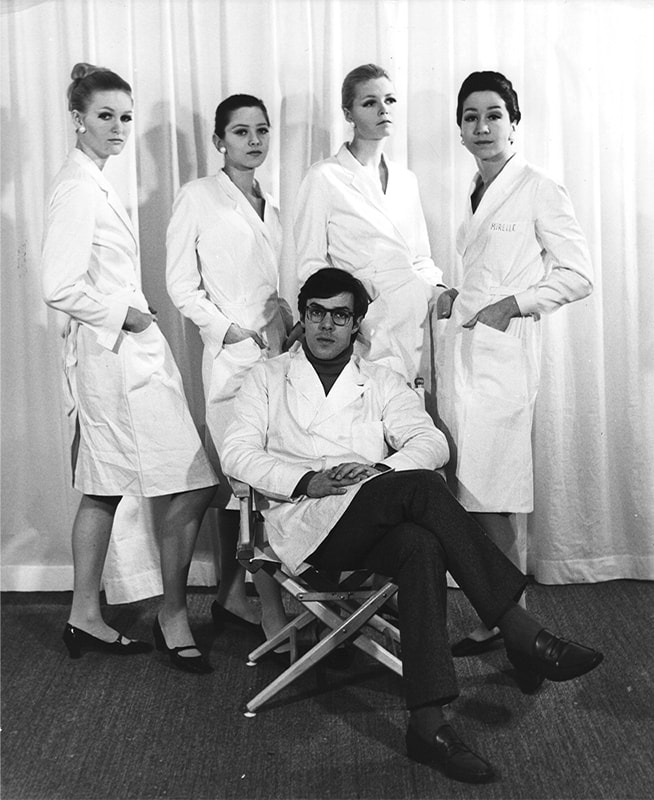
Meanwhile, the search for his own handwriting and style has begun. In 1967, Frans Molenaar feels skilled enough. He is driven and ready to conquer the Netherlands under his own, Dutch name.
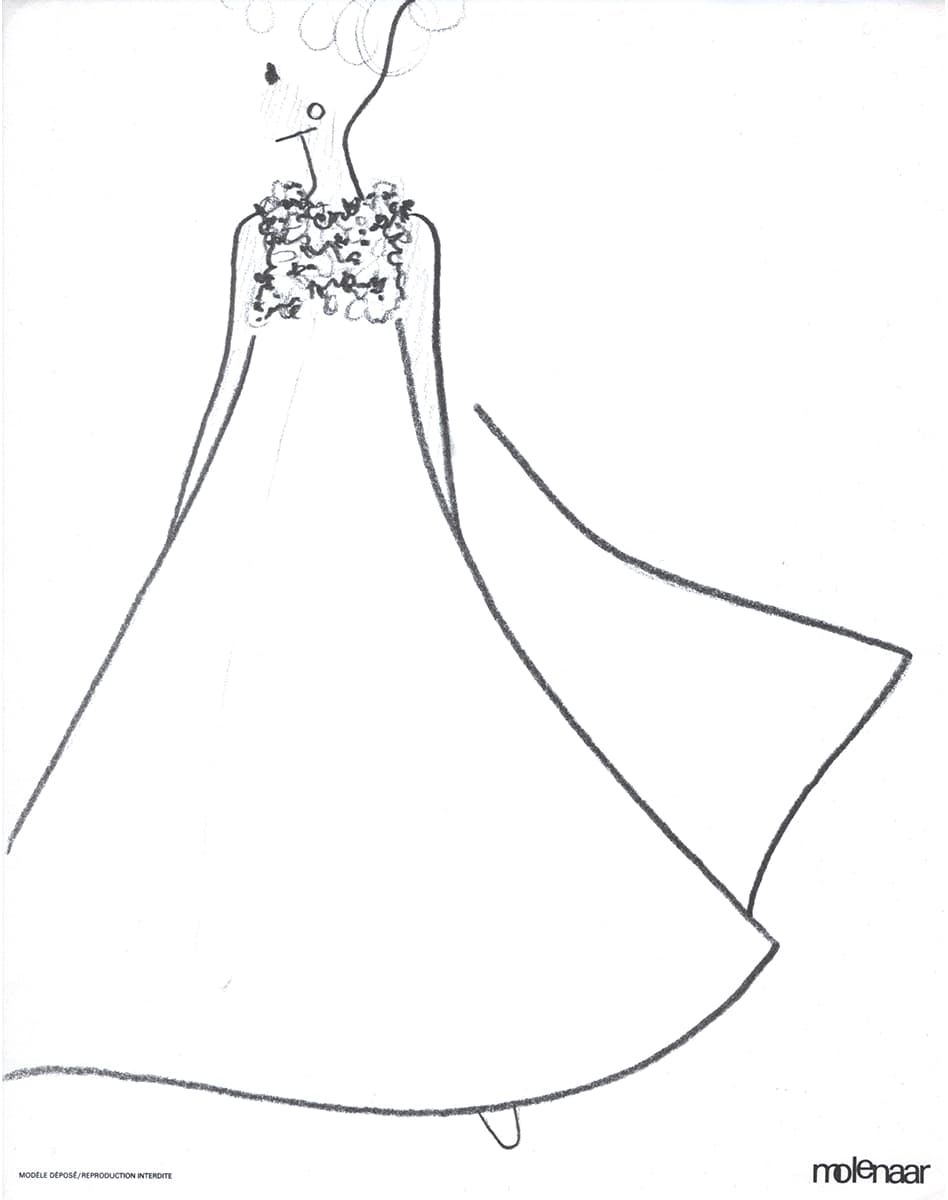
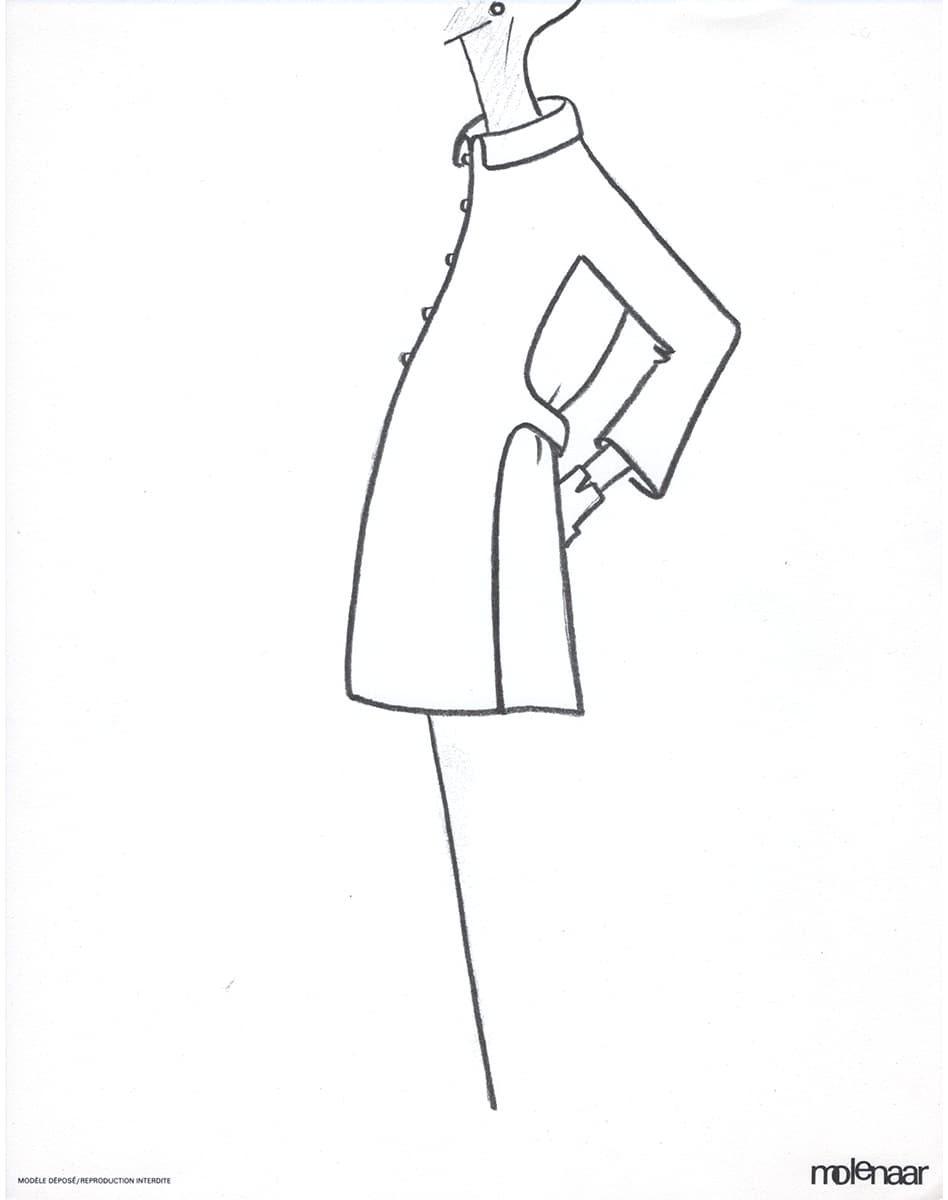
Credits
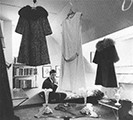

1960 – Presentation of the Silver Cotton Boll
First studio in
Netherlands Zandvoort
Photo: Kees Pot
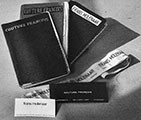
1959 - Labels and
Couture François address books
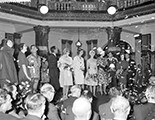
1960 – Presentation of the Silver Cotton Boll
Photo: Wim van Rossem - Anefo
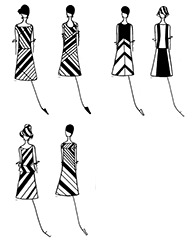
1963-1964
Design drawings from
application folder Frans Molenaar

Paris
Photo: Bianca Holzhaus
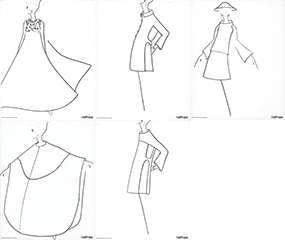
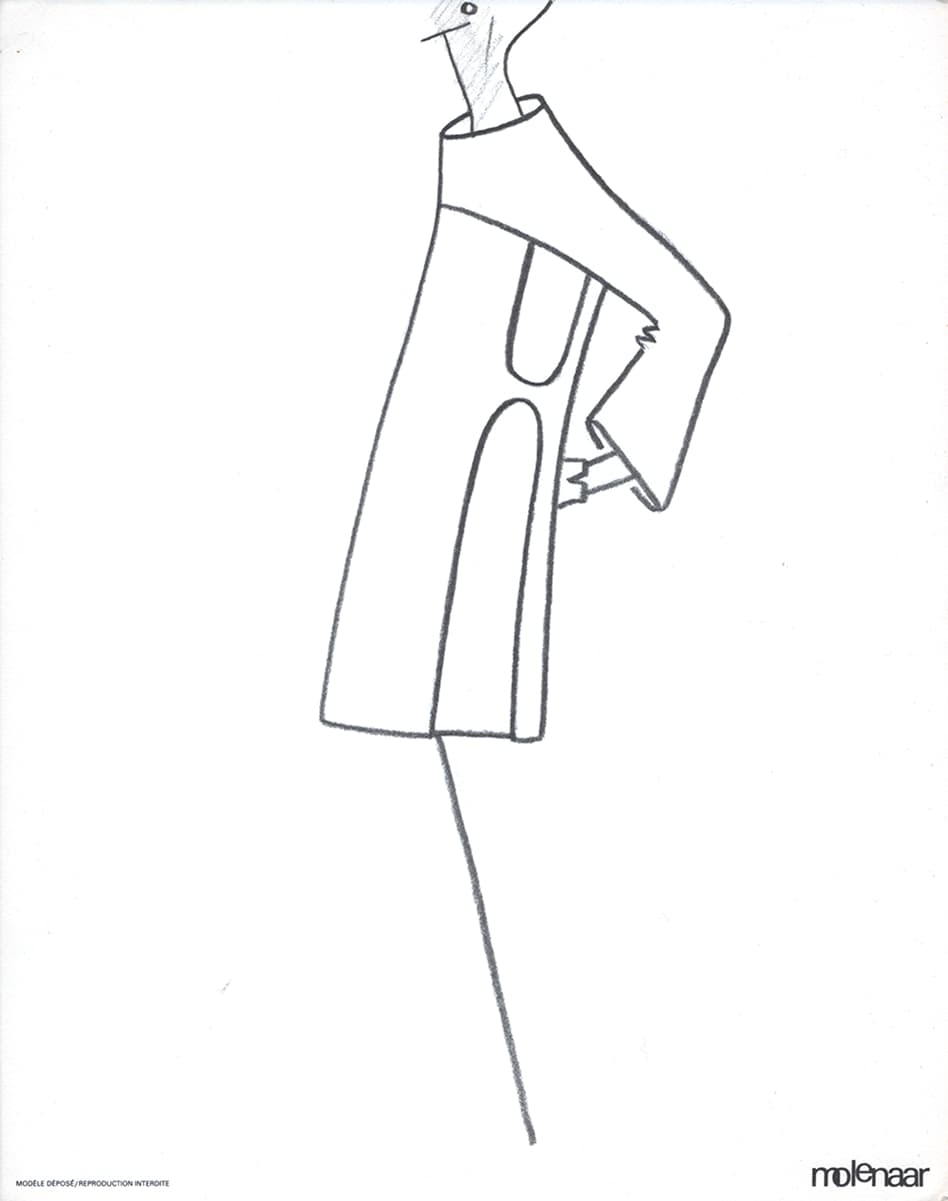
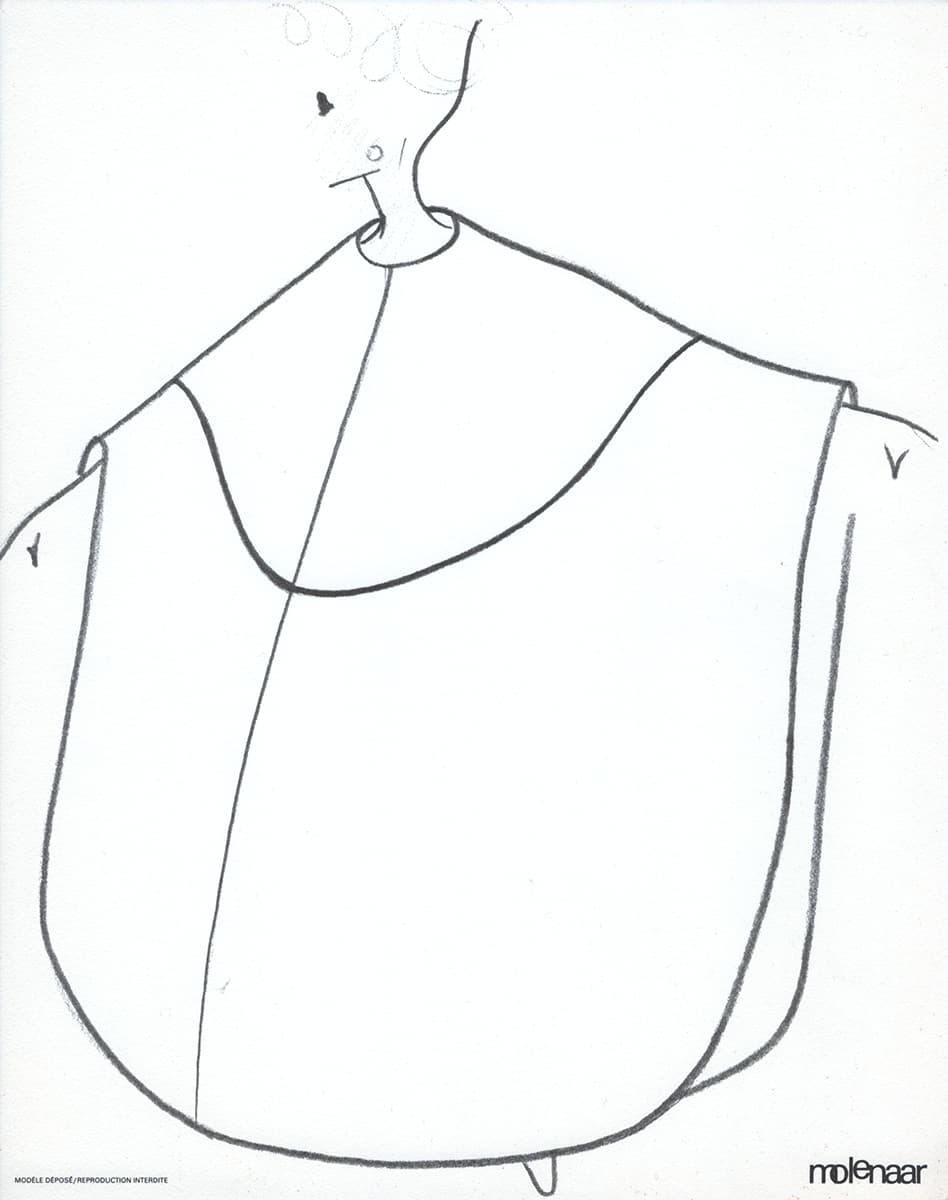
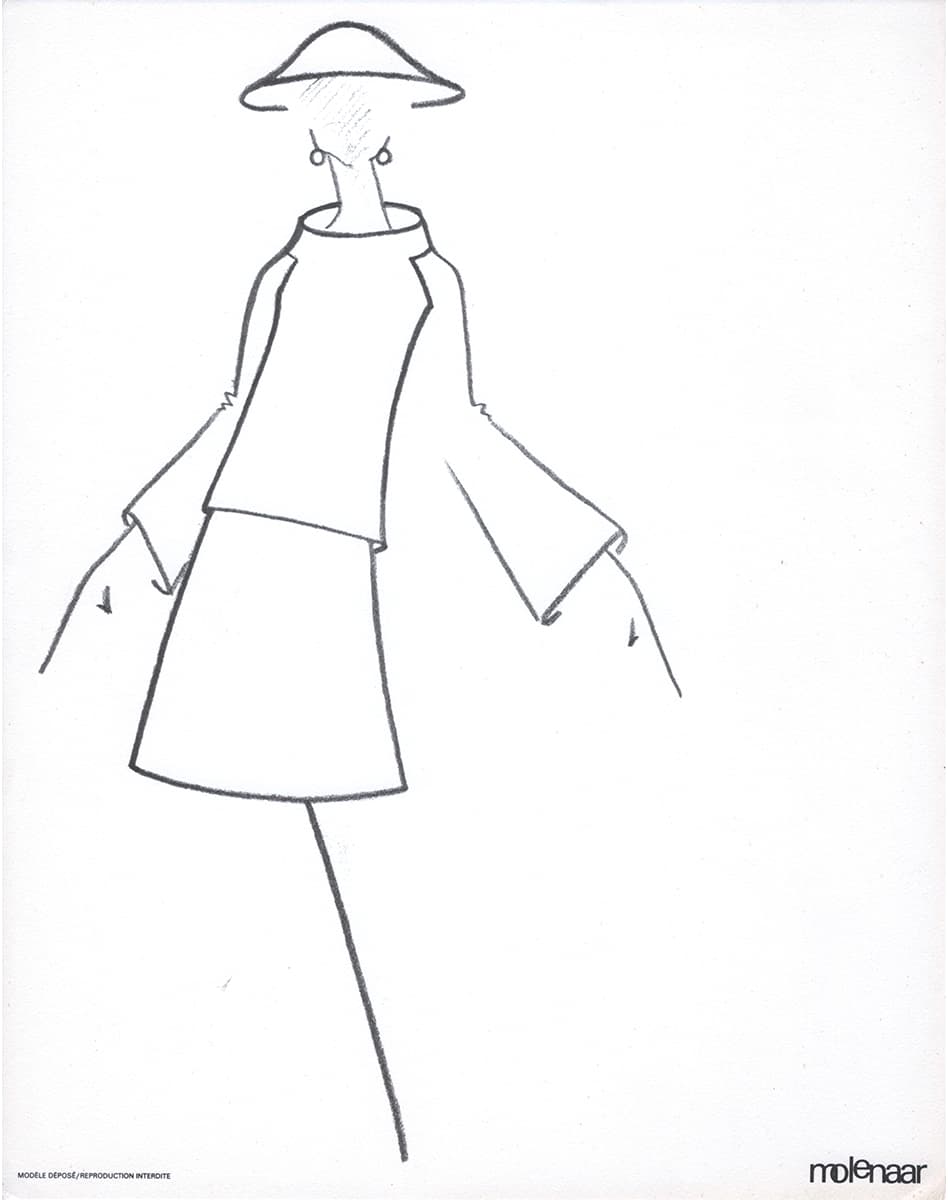
Spring-Summer Collection 1967
'La ligna Ronde'
Press sketches first couture show
21 January 1967
Hotel Continental, Paris
Paris, Paris!
In the late 1950s, the Paris shows of legendary fashion greats like Christian Dior and Yves Saint Laurent leave an indelible impression on the still young Frans Molenaar. It is therefore inevitable that he settles in the fashion city to further develop himself.
Read more >
Paris, Paris!
In the 1950s, Dutch couture is still firmly under the influence of the strict fashion house of Paris. Imitating French couture designs under license is very en vogue. Pattern, fabric use, and execution are closely monitored. A Dutch copy of a Dior coat suit is fully accepted and represents superior quality.
More eccentric couturiers, pioneers like Max Heymans and Dick Holthaus, do find their inspiration in Paris, but they chart a more independent course for Dutch fashion. They design under their own name.
Molenaars' earliest creations are not spared from French 'trends'. Although the fabrics used, such as printed cotton, as well as solid wool fabrics, are often quintessentially Dutch, produced in equally quintessential Dutch textile cities like Enschede or Tilburg.
At a young age, in his childhood home in Zandvoort, he began creating ensembles and cocktail dresses with boat necks, shawl collars, and petticoats with considerable flair. He worked under the ominous name "Couture François". This, according to him, "because all the fishmongers in Zandvoort are called Molenaar."
His creations quickly won several professional awards, giving his career a flying start. This not only promoted Dutch fabrics both domestically and internationally, but also generated positive publicity for Molenaar himself. His designs also ended up in Dutch clothing stores.
In the late 1950s, the Parisian shows of legendary fashion giants like Christian Dior and Yves Saint Laurent made an indelible impression on the young Frans Molenaar. It was therefore inevitable that he settled in the fashion capital to further his development.
After an internship with Charles Montaigne, he worked for several years at the atelier of Guy Laroche. At the fashion house Nina Ricci, he then became co-responsible for the couture designs.
Meanwhile, the search for his own handwriting and style has begun. In 1967, Frans Molenaar feels skilled enough. He is driven and ready to conquer the Netherlands under his own, Dutch name.
Credits
1960 – Presentation of the Silver Cotton Boll
First studio in
Netherlands Zandvoort
Photo: Kees Pot
1959 - Labels and
Couture François address books
1960 – Presentation of the Silver Cotton Boll
Photo: Wim van Rossem - Anefo
1963-1964
Design drawings from
application folder Frans Molenaar
Paris
Photo: Bianca Holzhaus
Spring-Summer Collection 1967
'La ligna Ronde'
Press sketches first couture show
21 January 1967
Hotel Continental, Paris
Paris, Paris!
In the late 1950s, the Paris shows of legendary fashion greats like Christian Dior and Yves Saint Laurent leave an indelible impression on the still young Frans Molenaar. It is therefore inevitable that he settles in the fashion city to further develop himself.
Read more >
Paris, Paris!
In the 1950s, Dutch couture is still firmly under the influence of the strict fashion house of Paris. Imitating French couture designs under license is very en vogue. Pattern, fabric use, and execution are closely monitored. A Dutch copy of a Dior coat suit is fully accepted and represents superior quality.
More eccentric couturiers, pioneers like Max Heymans and Dick Holthaus, do find their inspiration in Paris, but they chart a more independent course for Dutch fashion. They design under their own name.
Molenaars' earliest creations are not spared from French 'trends'. Although the fabrics used, such as printed cotton, as well as solid wool fabrics, are often quintessentially Dutch, produced in equally quintessential Dutch textile cities like Enschede or Tilburg.
At a young age, in his childhood home in Zandvoort, he began creating ensembles and cocktail dresses with boat necks, shawl collars, and petticoats with considerable flair. He worked under the ominous name "Couture François". This, according to him, "because all the fishmongers in Zandvoort are called Molenaar."
His creations quickly won several professional awards, giving his career a flying start. This not only promoted Dutch fabrics both domestically and internationally, but also generated positive publicity for Molenaar himself. His designs also ended up in Dutch clothing stores.
In the late 1950s, the Parisian shows of legendary fashion giants like Christian Dior and Yves Saint Laurent made an indelible impression on the young Frans Molenaar. It was therefore inevitable that he settled in the fashion capital to further his development.
After an internship with Charles Montaigne, he worked for several years at the atelier of Guy Laroche. At the fashion house Nina Ricci, he then became co-responsible for the couture designs.
Meanwhile, the search for his own handwriting and style has begun. In 1967, Frans Molenaar feels skilled enough. He is driven and ready to conquer the Netherlands under his own, Dutch name.
Credits
1960 – Presentation of the Silver Cotton Boll
First studio in
Netherlands Zandvoort
Photo: Kees Pot
1959 - Labels and
Couture François address books
1960 – Presentation of the Silver Cotton Boll
Photo: Wim van Rossem - Anefo
1963-1964
Design drawings from
application folder Frans Molenaar
Paris
Photo: Bianca Holzhaus
Spring-Summer Collection 1967
'La ligna Ronde'
Press sketches first couture show
21 January 1967
Hotel Continental, Paris
Paris, Paris!
In the late 1950s, the Paris shows of legendary fashion greats like Christian Dior and Yves Saint Laurent leave an indelible impression on the still young Frans Molenaar. It is therefore inevitable that he settles in the fashion city to further develop himself.
Read more >